
Linden Resident Lookup Record Coverage
Different Linden records answer different questions. A dated directory or census entry can support a historical household connection. The Linden DigiFind-It archive offers free searching across selected local material, while a deed or mortgage names a legal party rather than an occupant. The New Jersey YourMoney property data, City SDL tools, and County Clerk index each have their own timing and field limits. A careful records check retains the source, date, role, and access condition instead of turning one hit into a broad personal profile.
| Record | What It Confirms | Where | Access |
|---|---|---|---|
| Linden directory or newspaper | A dated local listing or public event context | Linden DigiFind-It | Free archive search, with collection gaps |
| Parcel or municipal property data | Parcel context, assessment fields, permits, or legal-owner clues | Linden SDL Portal | Account and live feature scope should be checked |
| Recorded land instrument | Party role, recording date, document reference, and published image when available | Union County Clerk land index | Public modern index; certified copies are separate |
| Public court docket | Public case metadata, party role, status, and disposition where allowed | New Jersey Courts | Free individual portals; restricted matters are omitted |
| Vital or voter route | An eligible event record or the registrant’s own status check | NJ Department of Health and NJ voter check | Restricted or person-specific |
Use the record that matches the question. A former classmate may be better anchored by a yearbook and newspaper notice. An heir question begins with a Surrogate estate search. A current address question may stop at the custodian if no narrow public record is available.
Linden Name-Match Checks
Common names create the largest risk in a records check. Compare at least two anchors before treating records as one person: name plus a street, name plus an age range, or name plus a dated family or business context. The Linden directory collection lists years from 1929 through 1982, but the 23 online items are not a continuous run. Inspect the scanned page, note the year and page image, and preserve the entry’s exact spelling. Census snapshots and local newspapers can then supply a separate date or household marker.
A deed, directory, voter result, or custody display does not establish present residence. Each is a snapshot made for a different purpose. Keep a competing-name note when spellings, streets, or dates conflict. If the sources do not converge, leave the connection unresolved rather than guessing.
Note: A matching surname alone is low-confidence evidence, especially when a Linden street, year, and documentary role do not also agree.
Linden Court Record Checks
The New Jersey Courts public search is a defined legal-record route, not a people directory. Its public menu separates civil and foreclosure party or docket searches, criminal name and county searches, judgment liens, tax matters, municipal ticket or complaint lookup, and opinions. A Linden municipal matter normally needs a ticket or complaint number. State civil and criminal searches use other keys, and a result must be read for party role, docket type, status, and disposition before it is connected to another Linden record.
The official case-jacket instructions show the structured result fields that can be checked: county, docket type, docket number and year, caption, court or venue, initiation date, case type and status, demand, track, judge, jury demand, disposition, and lien or disposition date. A public docket can omit document text or images. Older material may require a clerk inquiry, plain-copy request, certified-copy request, or an in-person public terminal.
The official New Jersey Courts search menu separates the available court lanes before a query is run.
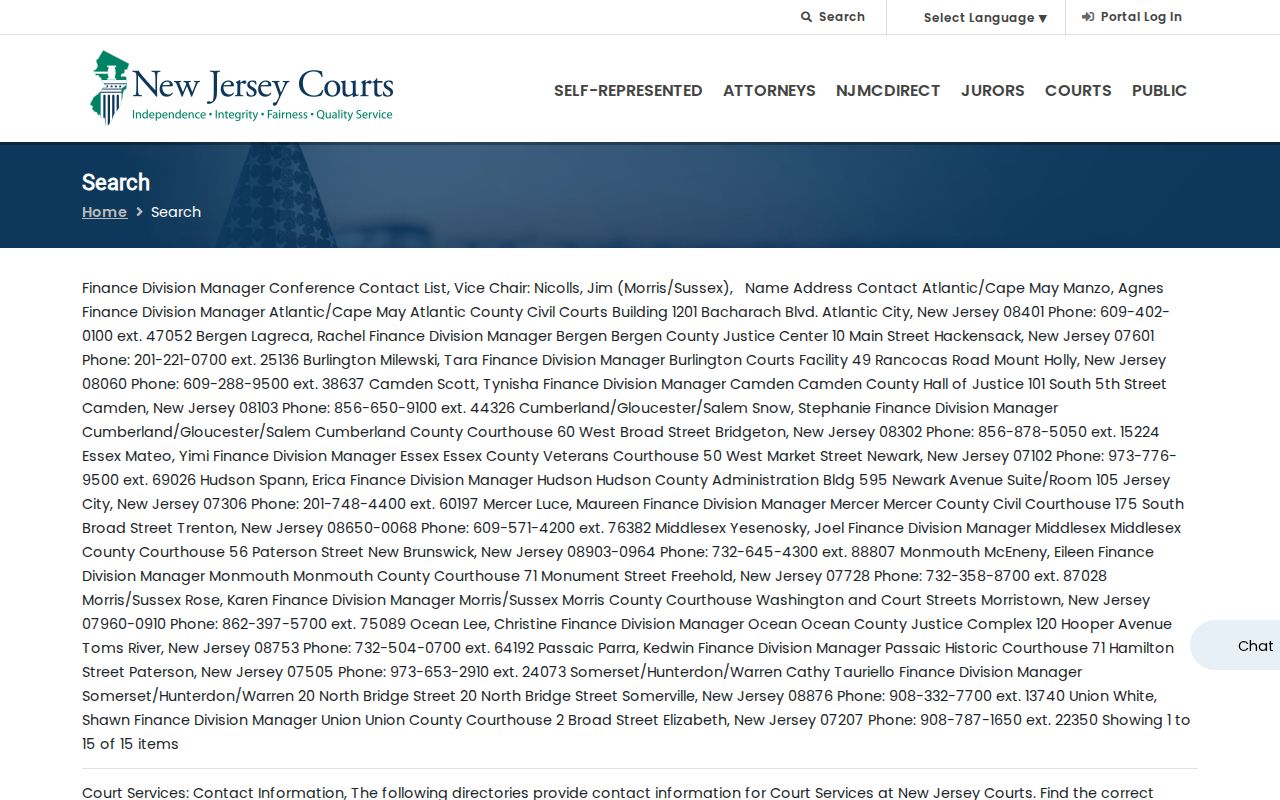
Use the menu to choose a record category first, then log the public result as a dated docket record rather than a statement about a person’s current life.
Linden Court Result Fields
A court result becomes useful only after its fields are separated from assumptions. The Judiciary sample supports a small, repeatable inventory. It is also a practical safeguard when the same name appears in several counties or case types.
| Case county and docket | Identifies the court lane and the case reference to retain. |
|---|---|
| Caption and party role | Shows how the name appears in the case, not where the person lives. |
| Filed date and status | Places the record in time and prevents an old filing from being treated as current. |
| Disposition and lien fields | Must be read before drawing any conclusion from a filing or judgment entry. |
| Document-list access | Signals that a docket may have metadata without public document text or images. |
Juvenile, expunged, sealed, adoption, protected-victim, medical, and other restricted material may be absent or redacted. A missing result can reflect an access rule. Do not try to reconstruct restricted information from separate records.
Linden Vital Record Routes
New Jersey vital records are not an unrestricted online name database. The Department of Health genealogy route is available only when the event and eligibility rule fit. Birth records require a deceased subject and a birth more than 80 years old, marriage records must be more than 50 years old, and death records more than 40 years old. The practical request starts with the subject’s full name, event city or county, and year. Exact date and parent information can help when known.
For an eligible historical request, the REG-28 genealogy form calls for event and requestor details, identification, payment, and mailing information. The state describes mail timing of roughly 10 to 12 weeks for the genealogy route. Current certified records use a different eligibility process; local registrar availability, fees, and timing vary. State, local registrar, and VitalChek routes each need their current instructions checked before an order.
The State’s REG-28 request instructions identify the historical genealogy route and the information it requires.
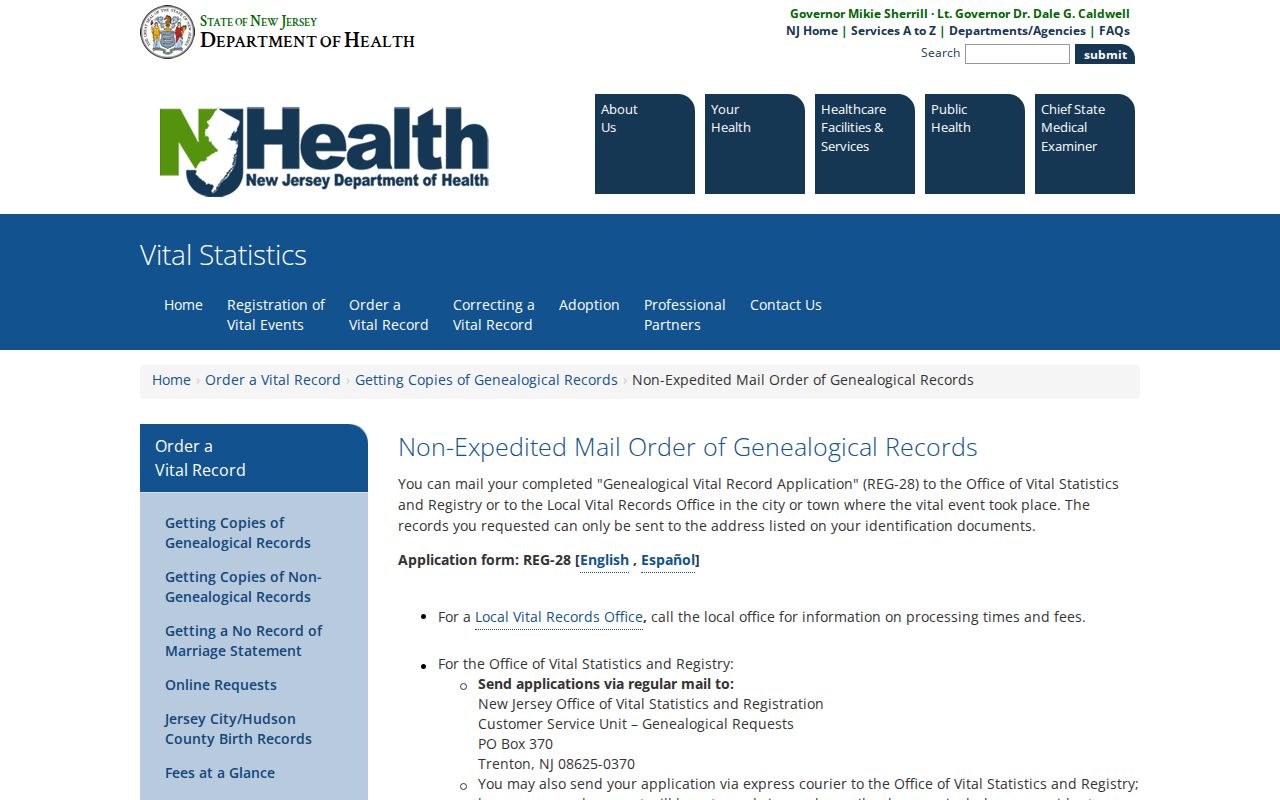
An informational genealogy copy can corroborate an older relationship or event, but it is not a certified identity document or a substitute for the current-record process.
Linden Voter and Parcel Routes
The New Jersey voter registration check is a person’s self-check, not a public browsing tool. It uses first name, optional middle initial, last name, and date of birth in month and year format. Exact registered spelling matters, including spacing, hyphens, surname changes, initials, and nicknames. Questions about election documents or current access rules belong with the Union County Board of Elections, which handles election-record requests under applicable rules and redactions.
For property context, Linden’s SDL description supports searches by address, owner name, or permit number and describes assessment, tax-lot, inspection, certificate, overlay, complaint, and violation information. A property owner or recorded party is not automatically a resident. When the goal shifts from one person to the full address trail, the Linden street directory follows the parcel and deed sequence without treating an owner field as proof of occupancy.
Verify a Linden Resident Lookup
Use a short verification sequence rather than collecting every available record. The aim is to test whether two dated records refer to the same person, while keeping legal-party, household, voter, and court roles distinct. When a field is blocked or restricted, the proper result is a narrow custodian request or a stop.
- Start with a dated Linden directory, newspaper, census, or other source that supplies a name and year.
- Normalize spelling, initials, street suffixes, and any entity terms such as estate, trust, or LLC before comparing another index.
- Check the relevant official route, such as a court docket, County Clerk party search, or an eligible vital request, and record the role and date shown.
- Require a second matching anchor before treating the records as one person. If needed, ask the custodian for a specific plain or certified copy.
- Docket
- A court’s identifying case reference, usually paired with a type, county, number, and year.
- Index and image
- An index lists searchable reference fields; an image is the underlying scanned record, which may have separate access.
- Certified copy
- A custodian-issued copy with official certification when that office offers one and the request meets its rules.
Note: Record the source URL, record date, document type, page or image reference, access limit, and confidence level with every Linden match.
Linden OPRA Record Route
When an official online search ends, the Linden City Clerk OPRA form offers a bounded municipal-record route. Ask for a record series, department, address or block and lot when relevant, date range, and preferred delivery method. The form supports written or electronic submission and lists pick-up, mail, on-site inspection, fax, and email delivery choices. It also has certifications and optional proof requirements where protected personal or health information is implicated.
New Jersey’s Open Public Records Act generally calls for a response within seven business days, subject to statutory exceptions. Linden’s instructions describe a 14-business-day review when commercial-purpose or Daniel’s Law review applies, statutory printed-copy fees, possible deposits above $5, and special-service costs where applicable. A targeted request for a permit log, certificate, dated complaint record, or department index is more useful than asking for everything about a person.
The official New Jersey OPRA law sets the access framework, timing, exemptions, and challenge routes for public-record requests.
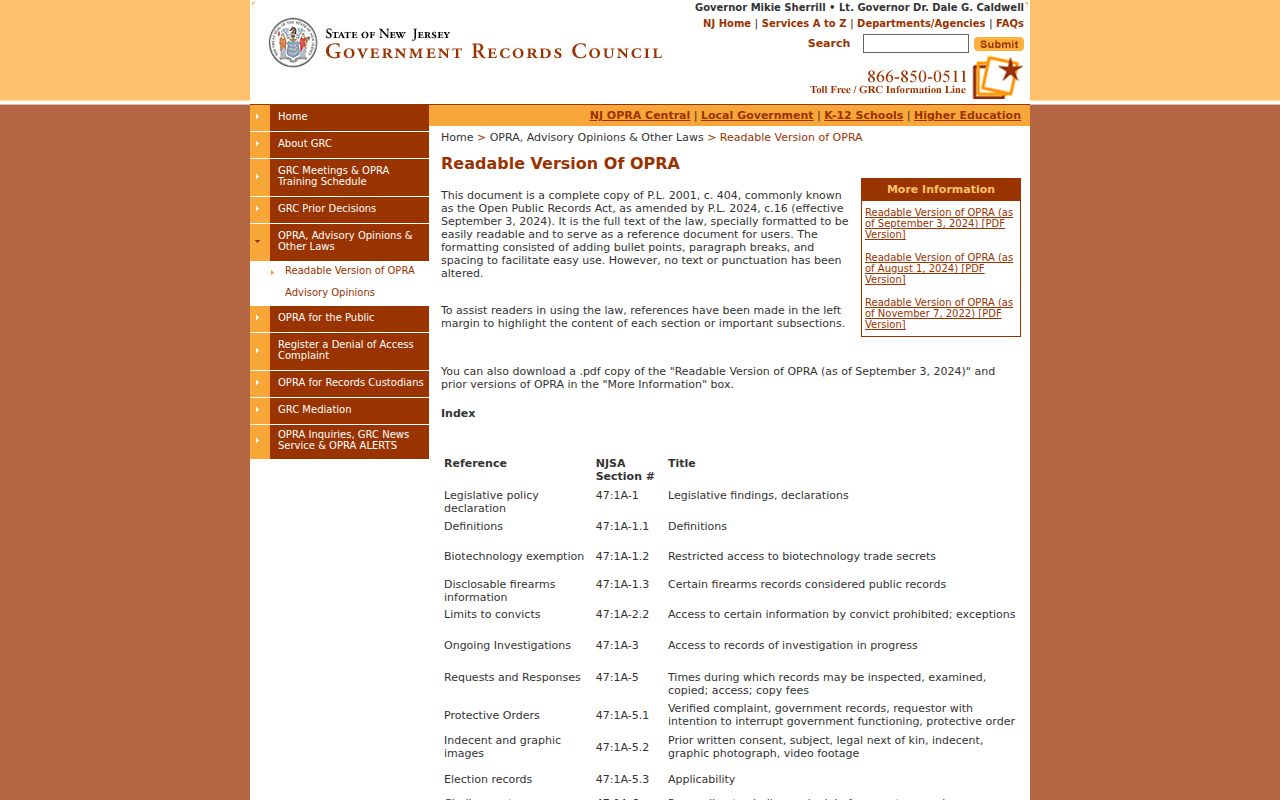
A precise request gives the custodian a record series and date range to review without inviting an unsupported search for a person’s private details.
Linden Resident Record Privacy Limits
New Jersey access law includes privacy boundaries. Daniel’s Law can shield covered persons’ home addresses and unpublished numbers on government sites, and the Address Confidentiality Program can provide an eligible participant a substitute legal address. Current vital records, protected voter information, minor information, personal phone and email details, driver records, and restricted court categories are not made open by combining search results. Redactions and an honest “not located” result are part of a careful records check.
For a possible error, return to the office that holds the source record with the dated record reference and a focused correction question. The New Jersey Office of Information Privacy explains Daniel’s Law protection, while a city, County Clerk, court, election office, archive, or health office controls its own underlying record. Preserve only what is necessary for the lawful question at hand.
Lawful use. Linden resident research is for personal, lawful purposes. Never use a record trail to stalk, harass, intimidate, or harm another person, and do not try to defeat a redaction or substitute address.